Mastering English for job interviews opens the door to numerous career opportunities and professional growth. Developing the necessary language skills can significantly boost your confidence and effectiveness during interviews, making a lasting positive impression on potential employers. Embarking on this journey involves strategic practice, vocabulary building, and cultural understanding, all tailored to ensure you stand out in competitive job markets.
This guide offers practical techniques to enhance speaking, listening, writing, and etiquette skills in English, empowering you to navigate interview scenarios with ease and professionalism. From simulating interview conditions to refining your communication style, each step is designed to prepare you thoroughly for success.
Techniques for Building Confidence in English for Interviews
Building confidence in English communication during interviews is essential for presenting yourself effectively and making a positive impression. Confidence not only enhances clarity but also reduces nervousness, allowing your skills and personality to shine through. Developing this confidence involves deliberate practice, mental preparation, and refined language skills tailored to professional contexts.Achieving fluency and self-assurance in interview settings requires methodical approaches that focus on both language proficiency and psychological readiness.
By consistently practicing specific techniques, candidates can transform anxiety into a demonstration of competence and poise, ultimately increasing their chances of success.
Practicing Speaking Clearly and Confidently in a Professional Context
To communicate effectively during interviews, it is crucial to focus on clarity and confidence in speech. The following methods help improve spoken English in a professional setting:
Regular practice of speaking skills enhances fluency and reduces hesitation. Engaging in activities that simulate real interview scenarios builds familiarity and comfort with common questions and responses. Improving pronunciation and intonation ensures that your message is understood and conveys professionalism.
- Participate in mock interviews with a friend, mentor, or coach, focusing on delivering concise and structured answers. Recording these sessions allows for self-assessment and identification of areas for improvement.
- Practice speaking in front of a mirror or through video recordings to observe body language, eye contact, and pronunciation. This visual feedback helps build awareness of non-verbal cues and speech clarity.
- Engage in daily speaking exercises, such as reading aloud or explaining topics related to your industry, to develop a natural flow and reduce nervousness.
- Use language learning apps or platforms that offer pronunciation drills and speech recognition technology, providing immediate feedback on clarity and accuracy.
Simulating Interview Scenarios to Reduce Anxiety
Creating realistic interview conditions through simulation is an effective strategy to lessen interview-related anxiety. This preparation helps develop familiarity with the format, typical questions, and appropriate responses, leading to greater confidence.
Simulating interview scenarios involves replicating the environment and pressure of real interviews. This process diminishes the fear of the unknown, allowing candidates to focus on delivering their best responses with composure.
- Set up a mock interview environment, ideally with a peer or coach acting as the interviewer. Use typical questions related to your target role and industry to make the practice as authentic as possible.
- Record these sessions to analyze your answers, pronunciation, and body language. Review the recordings to identify strengths and areas needing improvement.
- Repeat simulations regularly, gradually increasing the complexity or formality of questions. This exposure builds resilience and adaptability to different interview styles.
- Practice managing interview nerves by incorporating breathing exercises and positive visualization techniques before and during the mock sessions. These mental strategies help maintain composure under pressure.
Strategies to Improve Pronunciation and Intonation for Effective Communication
Clear pronunciation and appropriate intonation are vital for ensuring your message is understood and perceived as professional. Effective communication goes beyond vocabulary, encompassing how you say words and phrases.
Refining pronunciation and intonation enhances overall speech intelligibility and helps convey enthusiasm, confidence, and professionalism. These strategies support making a memorable and positive impression during interviews.
- Focus on common pronunciation challenges in English, such as differentiating between similar sounds (e.g., /r/ and /l/, /v/ and /w/). Use phonetic charts and practice minimal pairs to master these distinctions.
- Utilize online resources like pronunciation tutorials, accent reduction courses, or speech coaching to receive targeted feedback and personalized exercises.
- Practice reading aloud with emphasis on natural intonation patterns, stressing key words to convey meaning and enthusiasm. Record and listen to your speech to identify monotony or flat intonation, then work on adding variation.
- Learn and imitate the intonation contours of native speakers by listening to professional interviews, podcasts, or speeches. Mimicking intonation helps make your speech more engaging and easier to understand.
- Pay attention to stress and rhythm in sentences, as they significantly impact clarity. Using techniques like marking stress in scripts or notes can help internalize natural speech patterns.
Essential Vocabulary and Phrases for Job Interviews
Mastering the appropriate vocabulary and phrases is crucial for effectively communicating during a job interview in English. The right choice of words can convey professionalism, confidence, and clarity, all of which are vital for making a positive impression on potential employers. This section focuses on common interview questions, responses, and essential vocabulary categorized for different stages of the interview process.
Developing a robust vocabulary tailored to professional settings ensures that candidates can articulate their thoughts convincingly, handle various interview scenarios with ease, and demonstrate their suitability for the role. From greetings to closing remarks, understanding and practicing these phrases will significantly enhance interview performance.
Common Interview Questions and Appropriate Responses
Below is a structured table presenting typical interview questions alongside suggested responses. These examples serve as a reference to help candidates prepare articulate and relevant answers that highlight their strengths and align with employer expectations.
| Question | Sample Response | Key Points | Follow-up Phrases |
|---|---|---|---|
| Tell me about yourself. | “I am a dedicated professional with over five years of experience in project management, specializing in delivering high-quality solutions on time. I am passionate about teamwork and continuous learning.” | Brief overview of background, skills, and motivation. | “I look forward to applying my skills to contribute to your team.” |
| What are your strengths? | “My main strengths include strong communication skills, problem-solving abilities, and adaptability, which have helped me succeed in fast-paced environments.” | Highlight key competencies relevant to the role. | “These qualities enable me to handle challenges effectively.” |
| Describe your weaknesses. | “I sometimes find it challenging to say no when overwhelmed, but I am working on prioritizing tasks and delegating when appropriate.” | Be honest yet constructive; show improvement. | “I am committed to continuous self-improvement.” |
| Why should we hire you? | “My experience in this industry, combined with my proactive attitude and problem-solving skills, makes me confident that I can contribute significantly to your team’s success.” | Align your skills with the company’s needs. | “I am eager to bring value to your organization.” |
Categorized Vocabulary for Professional Settings
Using precise and polite expressions helps set a professional tone during interviews. The following vocabulary categories cover greetings, introductions, and closing remarks essential for establishing rapport and leaving a positive impression.
- Greetings: “Good morning,” “Hello,” “It’s a pleasure to meet you,” “Thank you for having me.”
- Introductions: “My name is [Name], and I have a background in [field/industry].” “I am excited about this opportunity because…”
- Closing Remarks: “Thank you for your time and consideration.” “I look forward to the possibility of working with your team.” “Please let me know if you need any further information.”
Phrases for Discussing Qualifications, Strengths, and Weaknesses
Effectively communicating your qualifications and personal qualities in English involves using specific phrases that demonstrate confidence and self-awareness. The following set of phrases can be integrated into interview responses to articulate your professional profile convincingly.
“I have developed strong skills in [specific skill], which I believe will be valuable for this role.”
“My experience in [industry or role] has equipped me with the ability to handle [specific tasks or challenges].”
“I consider my greatest strengths to be [list strengths], which have consistently contributed to my success.”
“One area I am working to improve is [weakness], and I have taken steps such as [actions] to address this.”
Using such phrases consistently can help candidates present themselves professionally and convincingly, showcasing their suitability for the position while maintaining humility and openness to growth.
Listening and Comprehension Skills for Interview Success

Developing strong listening and comprehension skills is essential for excelling in English-language job interviews. These skills enable candidates to accurately understand questions, interpret nuances, and respond effectively, thereby making a positive impression on interviewers. Mastering this area can significantly boost confidence and improve overall interview performance.
Enhancing listening abilities involves targeted exercises, exposure to diverse speech patterns, and active practice. It is equally important to adapt to various accents and speech speeds commonly encountered in professional settings. Additionally, understanding how to interpret interview questions accurately is crucial for providing relevant and well-structured answers that meet the interviewers’ expectations.
Methods to Enhance Listening Skills through Targeted Exercises and Practice Sessions
Consistent practice is key to improving listening and comprehension. Engaging in a variety of exercises can help build this competency effectively:
- Listening to professional interviews, podcasts, or webinars in English, paying close attention to context, tone, and key details.
- Practicing with audio recordings of common interview questions and answers, then replaying to identify critical points and unfamiliar phrases.
- Participating in simulated interview sessions where the candidate listens to questions and formulates responses, focusing on understanding the full question before answering.
- Using online platforms that offer interactive listening exercises designed for job interview preparations, which often include quizzes and comprehension checks.
Regularly practicing under realistic conditions, such as simulating interview environments, helps develop the ability to listen attentively and respond confidently during actual interviews.
Understanding Different Accents and Speech Speeds in Interviews
In today’s globalized job market, interviewers may have various accents and speak at differing speeds. Being prepared to comprehend diverse speech patterns enhances communication effectiveness:
- Expose yourself to multimedia content featuring accents from different regions, such as British, Australian, Indian, or American English, to familiarize your ear with varied pronunciation and intonation.
- Gradually increase listening difficulty by choosing recordings that feature faster speech speeds or include colloquial expressions and idioms common in professional contexts.
- Utilize speed control tools on digital platforms to practice understanding speech at both slower and faster paces, gradually adapting to natural interview speeds.
- Practice active listening by noting key phrases, s, and context clues, which help to decipher unfamiliar accents or rapid speech.
“Active listening involves not only hearing words but also interpreting meaning, tone, and intent, especially when accents or speech speeds vary.”
Techniques to Interpret Interview Questions Accurately and Formulate Appropriate Answers
Correct interpretation of interview questions is fundamental to providing relevant responses. Applying effective techniques can improve understanding and communication clarity:
- Focus on the question as a whole rather than individual words; pay attention to the main idea and context to grasp the interviewer’s intent.
- Use mental framing — paraphrasing the question mentally to confirm understanding before responding.
- Practice note-taking during mock interviews, jotting down s or phrases to ensure clarity and accuracy in responses.
- Develop a habit of asking clarifying questions if the interview context allows, such as, “Could you please clarify if you are referring to…?” This demonstrates attentiveness and ensures precise communication.
- Gain familiarity with common interview question structures, including behavioral, situational, and competency-based questions, to anticipate and interpret them effectively.
Employing these techniques enables candidates to respond thoughtfully, demonstrating their communication skills and professionalism during the interview process.
Cultural and Professional Etiquette in English Interviews
Understanding and practicing proper cultural and professional etiquette is vital for success in English interviews. These protocols not only demonstrate respect and professionalism but also help create a positive impression on interviewers from diverse backgrounds. Adhering to appropriate conduct in both virtual and in-person settings ensures clear communication and fosters mutual understanding, which are essential for securing the desired position.
In international and multicultural workplaces, awareness of different customs and expectations becomes increasingly important. Being well-versed in these norms enhances your ability to interact effectively, display cultural sensitivity, and adapt your communication style to various professional environments. This approach reflects your competence and readiness to participate in a globalized work culture.
Importance of Formal Language and Tone in Interview Settings
Using formal language and maintaining a respectful tone are fundamental aspects of professional communication during interviews. Formal language conveys seriousness, respect, and competence, which are highly valued by interviewers. It involves choosing appropriate vocabulary, avoiding slang or overly casual expressions, and speaking clearly and confidently.
During an interview, the tone should be polite, composed, and confident. This establishes a professional atmosphere and demonstrates your ability to communicate effectively in formal business contexts. Employing courteous expressions, such as “Thank you for this opportunity,” and addressing interviewers respectfully, using titles or surnames unless instructed otherwise, enhances your professional demeanor.
Procedures for Appropriate Body Language and Facial Expressions
Effective body language and facial expressions play a crucial role in conveying confidence and engagement during both virtual and in-person interviews. They help reinforce your spoken words and create a positive connection with interviewers.
In in-person interviews, maintaining good posture, making appropriate eye contact, and offering a firm handshake are standard practices. Smiling naturally and nodding occasionally show active listening and enthusiasm. Gestures should be controlled and purposeful to avoid appearing overly nervous or inattentive.
In virtual interviews, body language remains important, but some cues may be less visible. Sitting upright, maintaining eye contact with the camera, and ensuring your facial expressions reflect attentiveness are key. Ensure your background is tidy and lighting is adequate to present a professional image. Avoid distracting movements or gestures that could detract from your message.
Cultural Customs and Expectations for Professional Interactions
Different workplace cultures have specific customs and expectations that influence professional interactions. Being aware of these nuances demonstrates cultural sensitivity and adaptability, qualities highly valued in global workplaces.
For example, in Western cultures, direct eye contact and firm handshakes are often seen as signs of confidence and honesty. Conversely, in some Asian cultures, a slight bow or a softer handshake might be more appropriate, and excessive direct eye contact could be considered intrusive.
Respect for hierarchy and formality can vary significantly: some cultures emphasize formal titles and respectful distance, while others adopt a more casual approach. Understanding these distinctions enables you to adjust your communication style appropriately and avoid potential misunderstandings.
Additionally, punctuality is universally valued but may have different perceptions across cultures. In many countries, arriving on time or slightly early is expected, while in others, a flexible approach to timing might be acceptable. Recognizing and respecting these differences fosters a positive professional rapport.
Epilogue
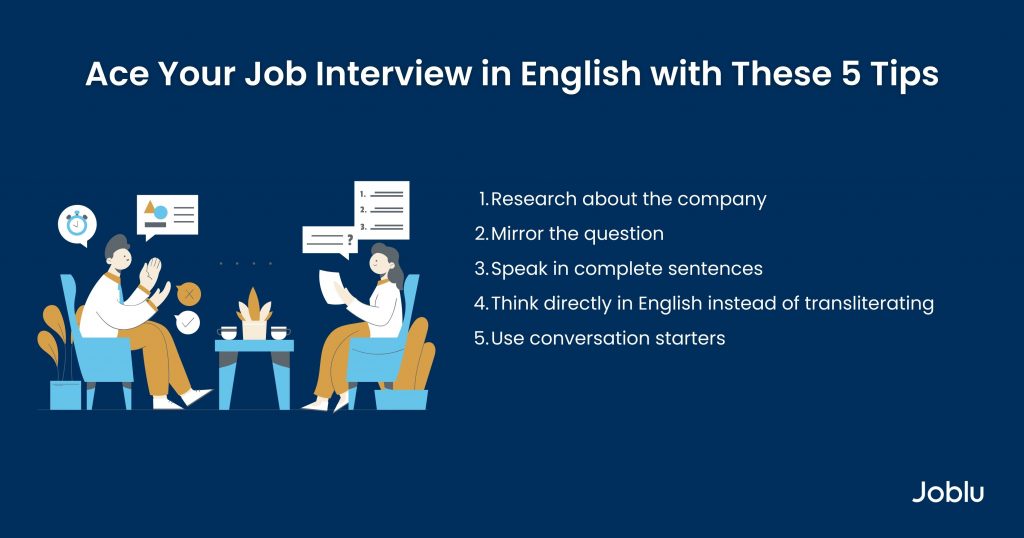
By integrating these essential strategies, you can confidently approach job interviews with improved language proficiency and cultural awareness. Consistent practice and constructive feedback will further accelerate your progress, ultimately leading to your career aspirations becoming a reality. Remember, mastery of English for interviews is a valuable investment in your professional future.