Discovering how to learn English with songs and subtitles offers a dynamic and engaging approach to language acquisition. This method combines the enjoyment of music with the educational benefits of visual aids, creating an immersive learning experience that enhances pronunciation, vocabulary, and listening skills. By integrating music into your study routine, you can transform the typically tedious process of language learning into an enjoyable activity that fosters real-world communication skills.
Utilizing carefully selected songs and accurate subtitles allows learners to improve their understanding of pronunciation, idiomatic expressions, and grammatical structures. Supported by research and success stories, this approach proves to be an effective and motivational method for learners aiming to achieve fluency in English while enjoying their favorite tunes.
Overview of Learning English through Songs and Subtitles
Learning English through songs enhanced with subtitles offers a dynamic and engaging approach to language acquisition. By integrating music with visual text, learners can experience a more immersive method that combines auditory and visual stimuli, making the process both enjoyable and effective. This method leverages the natural rhythm and melody of songs to facilitate easier retention of vocabulary and pronunciation patterns, thereby improving overall language skills.
Combining music and subtitles caters to different learning styles—auditory, visual, and kinesthetic—ensuring a comprehensive learning experience. It allows learners to see the written words while hearing them spoken naturally, which reinforces correct pronunciation and intonation. Additionally, the repetitive nature of songs helps solidify vocabulary and grammatical structures in memory. Studies have shown that students who incorporate music into language learning demonstrate higher engagement levels and better retention rates.
For instance, research published by the University of Edinburgh highlights that musical elements significantly enhance language learning by improving phonological awareness and listening skills.
Benefits of Combining Music and Subtitles in Language Learning
Using songs with subtitles offers several notable advantages for learners aiming to improve their English proficiency:
- Enhanced Pronunciation: Listening to songs sung by native speakers helps learners grasp the correct pronunciation, stress, and intonation patterns. Subtitles provide a visual cue that reinforces the audio, enabling learners to mimic sounds accurately.
- Vocabulary Expansion: Songs often incorporate idiomatic expressions, colloquialisms, and everyday vocabulary. Seeing these words in subtitles facilitates immediate recognition and understanding, which aids in vocabulary retention.
- Improved Listening Skills: Regular exposure to songs with subtitles trains the ear to distinguish different sounds, accents, and speaking speeds. This skill is essential for understanding real-life conversations and media.
Supporting Evidence and Effectiveness
Empirical evidence underscores the effectiveness of using songs with subtitles as a language learning tool. According to a 2018 study by the British Council, 85% of learners who incorporated music into their study routines reported increased motivation and noticeable improvements in listening comprehension within three months. Furthermore, the use of songs has been linked to better pronunciation accuracy, with research indicating learners often imitate the intonation and rhythm of songs more effectively than traditional classroom methods.
Real-world examples include language learners who participate in song-based activities showing higher fluency levels and more natural speech patterns after consistent practice. Schools and language programs that utilize musical methods observe higher engagement and faster vocabulary acquisition, demonstrating that this approach is both practical and beneficial for diverse learner groups.
Selecting Suitable Songs and Videos for Language Practice
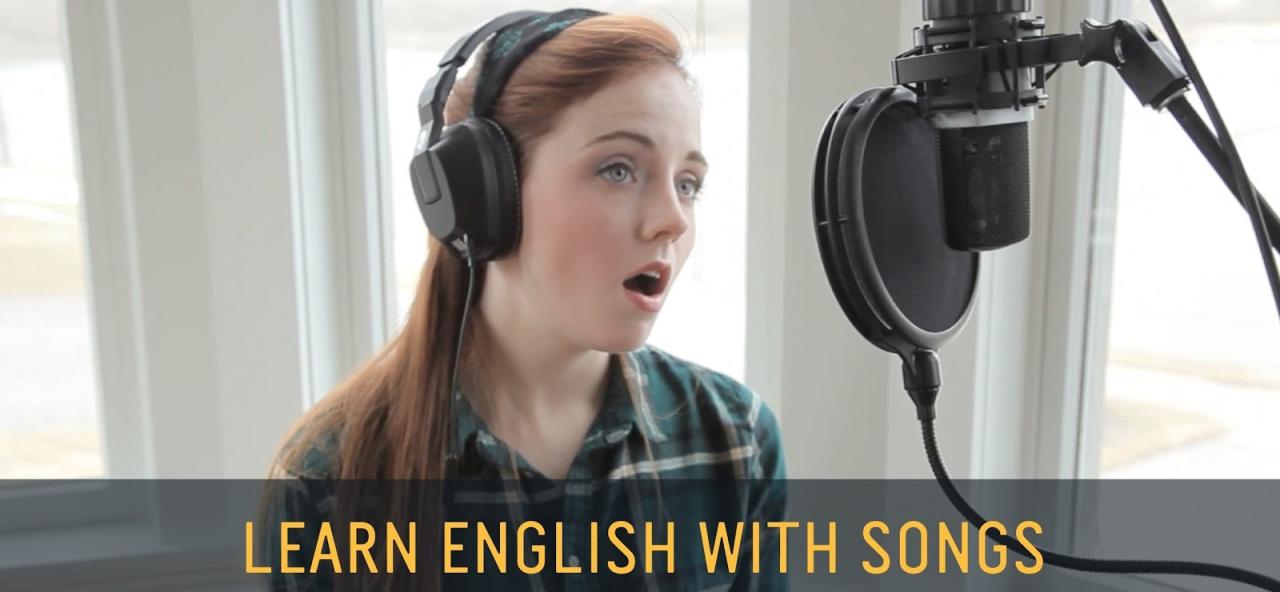
Choosing the right songs and videos is a foundational step in effective language learning through music and subtitles. Carefully selecting materials that match your vocabulary proficiency and auditory preferences can significantly enhance comprehension and retention. An appropriate selection ensures that learners remain motivated while progressively challenging themselves to improve their language skills.
When selecting songs and videos for practice, it is essential to consider both the complexity of the lyrics and the musical genre. Songs that align with your current vocabulary level allow for smoother understanding and reduce frustration. Meanwhile, the musical genre can influence your engagement; genres like pop or ballads often feature clear vocals and slower tempos, making them more suitable for beginners, while genres like rap or indie may introduce more slang or complex expressions suitable for advanced learners.
Selecting Songs Based on Vocabulary Level and Genre
For effective learning, learners should evaluate songs based on their current vocabulary knowledge and musical preferences. Starting with songs that contain familiar words and straightforward sentence structures fosters confidence and comprehension. As proficiency improves, gradually transitioning to songs with more varied vocabulary and complex lyrics challenges the learner and broadens language skills.
Considering musical genres is vital because each genre tends to have characteristic lyrical styles and vocabulary complexity. For example, classic pop songs often feature simple and repetitive lyrics, making them suitable for beginners. Conversely, genres like jazz or indie may include poetic language and idiomatic expressions that are appropriate for advanced learners seeking to expand their linguistic nuance.
Recommended Genres with Songs and Difficulty Levels
Below is a table illustrating popular musical genres, associated recommended songs, and their general difficulty levels to guide selection:
| Genre | Recommended Songs | Difficulty Level |
|---|---|---|
| Pop | “Shape of You” by Ed Sheeran, “Happy” by Pharrell Williams | Easy to Moderate |
| Ballads | “Someone Like You” by Adele, “All of Me” by John Legend | Easy to Moderate |
| Country | “Take Me Home, Country Roads” by John Denver, “Bless the Broken Road” by Rascal Flatts | Moderate |
| Rock | “Let It Be” by The Beatles, “Wonderwall” by Oasis | Moderate |
| R&B/Soul | “Say So” by Doja Cat, “Adorn” by Miguel | Moderate to Difficult |
| Jazz/Blues | “Fly Me to the Moon” by Frank Sinatra, “Feeling Good” by Nina Simone | Difficult |
| Rap/Hip-Hop | “Lose Yourself” by Eminem, “SICKO MODE” by Travis Scott | Difficult |
Checklist for Identifying Clear Lyrics and Accurate Subtitles
Accurate lyrics and high-quality subtitles are crucial for maximizing the benefits of learning through songs. To ensure effective practice, learners should verify these elements before engaging deeply with a song or video.
Effective learning materials have clear, well-phrased lyrics and synchronized, accurate subtitles that reflect spoken words precisely.
Use this checklist to evaluate the suitability of songs and videos:
- Lyric clarity: Lyrics should be sung clearly, with minimal background noise or overlapping sounds that hinder understanding.
- Subtitle accuracy: Subtitles must match the lyrics precisely, including proper spelling, punctuation, and timing synchronization.
- Language simplicity: Subtitles should contain language appropriate to your proficiency level, avoiding overly complex expressions initially.
- Consistency: The subtitles should be consistent with the lyrics, with no significant discrepancies or omissions.
- Visual presentation: Lyrics and subtitles should be displayed prominently and remain visible long enough for learners to process them fully.
By applying this checklist, learners can filter out materials that may cause confusion or hinder progress, ensuring a smoother and more productive language learning experience through songs and subtitles.
Using Subtitles Effectively to Enhance Understanding
Subtitles serve as a vital tool in language learning through songs, offering visual support that complements auditory input. When used correctly, they can significantly improve comprehension, vocabulary acquisition, and pronunciation skills. Effective utilization of subtitles transforms passive listening into an active learning experience, allowing learners to engage more deeply with the lyrics and language patterns.
To maximize the benefits of subtitles, learners need to adopt strategic approaches, such as pausing and replaying specific sections, comparing subtitles with actual lyrics, and understanding different formats. These techniques foster a clearer understanding of language nuances and idiomatic expressions, making the learning process more efficient and enjoyable.
Using Pausing and Replaying to Focus on Specific Lyrics
Pausing and replaying are fundamental practices that enable learners to analyze challenging parts of a song. By stopping the playback at specific lines or phrases, learners can focus on understanding individual words and pronunciation. Replaying sections helps reinforce memory, improve listening accuracy, and clarify any misunderstandings about the lyrics.
For optimal results, learners should identify sections of interest—such as complex vocabulary, idiomatic expressions, or pronunciation challenges—and repeatedly listen to those segments. Taking notes during this process can help reinforce learning and facilitate active usage of new words and expressions in speech or writing.
Comparing Subtitles with Song Lyrics to Identify New Words and Expressions
Comparing subtitles with official song lyrics is an effective method to discover vocabulary and idiomatic expressions that may not be familiar. This side-by-side comparison helps learners recognize contextual meanings and nuances that are often lost when only listening. It encourages active engagement and critical analysis of language usage within songs.
By noting down new words, phrases, or colloquialisms, learners expand their vocabulary and understand how certain expressions are used naturally. This comparison also reveals differences between various subtitle formats and the actual lyrics, allowing learners to develop an awareness of pronunciation variations and slang used in informal settings.
Organizing Examples of Subtitle Formats and Their Advantages
Different subtitle formats cater to various learning preferences and purposes. Recognizing these formats and their benefits helps learners choose the most suitable option for their needs.
| Subtitle Format | Description | Advantages |
|---|---|---|
| Karaoke Style | Lyrics are highlighted in sync with the song, often with words lighting up as they are sung. | Enhances rhythm recognition, improves pronunciation, and makes it easier to follow along with the melody. |
| Full Lyrics with Timing | Complete lyrics displayed with timestamps indicating when each line is sung. | Allows for precise pausing and replaying, aiding in detailed analysis and vocabulary building. |
| Subtitles with Translations | Lyrics presented in the original language alongside translations. | Facilitates understanding of meaning, especially for complex or idiomatic expressions, and supports bilingual learning. |
Using karaoke-style subtitles boosts engagement and helps internalize pronunciation patterns, while full lyrics with timestamps enable focused practice on challenging sections. Translated subtitles bridge comprehension gaps for learners at varying levels.
Techniques for Active Listening and Reading
Engaging actively with songs and subtitles enhances language acquisition by fostering deeper comprehension and retention. Developing specific techniques for listening and reading allows learners to maximize the educational benefits of this method. These strategies help transform passive consumption into an interactive and effective learning experience, ensuring that learners not only understand the content but also improve their pronunciation, vocabulary, and overall fluency.Active listening and reading involve concentrated efforts to interpret and analyze the material encountered in songs and subtitles.
By employing targeted techniques, learners can better grasp nuances in pronunciation, intonation, and contextual meanings, which are crucial for mastering a new language. The following methods are designed to build these skills systematically and progressively.
Transcribing Lyrics for Improved Accuracy
Transcription is a highly effective method for honing listening skills. It involves writing down lyrics as they are heard, encouraging learners to pay close attention to phonetic details and word boundaries. This process not only improves auditory discrimination but also reinforces spelling and recognition of common phrases.
- Start by selecting a clear, moderately paced song with accurate lyrics available. Play the song once or twice without pausing to get a general understanding.
- Play the song slowly or use the repeat function to allow careful listening. Pause after each line or verse to transcribe what is heard, comparing it with the official lyrics afterward.
- Focus on phonetic nuances, such as contractions, slang, or regional pronunciation variations, which can be challenging but vital for real-life comprehension.
- Gradually increase the difficulty by attempting to transcribe entire songs without pause, developing both accuracy and speed.
“Transcribing lyrics transforms passive listening into active engagement, sharpening both auditory and orthographic skills.”
Annotating Unfamiliar Words in Subtitles
Annotating unfamiliar words enhances vocabulary acquisition and contextual understanding. This process involves actively marking and researching new terms encountered in subtitles, making the learning process dynamic and personalized.
When watching songs with subtitles, learners should keep a dedicated notebook or digital document for new vocabulary. Each unfamiliar word should be written down along with its context, which aids in understanding the word’s meaning and usage.
To deepen comprehension, learners can use online dictionaries, translation tools, or language learning apps to find precise definitions, synonyms, and pronunciation guides. Additionally, noting down example sentences or related phrases can solidify the learner’s grasp of how the word functions within different contexts.
Regular review of these annotations reinforces vocabulary retention and promotes active recall, which is essential for language acquisition.
| Step | Procedure | Purpose |
|---|---|---|
| Identify | Pause the video at natural breakpoints or when new words appear. | Focus on specific words or phrases for annotation. |
| Annotate | Write down the unfamiliar word along with its context and initial impressions. | Encourage active engagement and immediate understanding. |
| Research | Use reliable sources to find definitions, pronunciations, and example sentences. | Enhance vocabulary and contextual grasp. |
| Review | Periodically revisit the annotated words and their meanings. | Reinforce long-term retention and usage. |
Exercises for Reinforcing Pronunciation through Shadowing and Singing
Practicing pronunciation through shadowing and singing consolidates the learner’s ability to replicate native-like sounds and intonation patterns. These exercises also boost confidence and fluency in spoken English.
Shadowing involves listening to a song or dialogue and simultaneously repeating it aloud, mimicking the speaker’s pronunciation, rhythm, and intonation. This technique emphasizes real-time speech production, making it highly effective for accent and pronunciation development.
Singing along with songs is an enjoyable and practical activity that encourages learners to practice pronunciation, intonation, and pacing. It also helps internalize common expressions and idiomatic phrases used in everyday conversation.
To maximize these exercises, learners should:
- Choose songs that match their current listening level, gradually progressing to more complex pieces.
- Listen carefully to the pronunciation and intonation before attempting to shadow or sing.
- Repeat the exercise multiple times, aiming for accuracy and natural flow rather than perfect imitation initially.
- Record their voice to compare with the original and identify areas for improvement.
- Incorporate these practices into daily routines to build consistency and confidence over time.
“Shadowing and singing are engaging, effective methods to improve pronunciation, rhythm, and intonation, making language learning both fun and productive.”
Integrating Vocabulary and Grammar Practice
Engaging with songs and subtitles offers an immersive environment for expanding vocabulary and understanding grammatical structures in context. This approach encourages active learning by extracting new language elements directly from authentic materials, thereby making the learning process both engaging and effective. Integrating vocabulary and grammar exercises into song-based learning ensures learners can reinforce language concepts while enjoying music, leading to improved retention and fluency.Analyzing lyrics for vocabulary and grammatical features allows learners to see language in use, highlighting nuances and contextual meanings.
Creating dedicated activities such as vocabulary extraction, grammatical analysis, and contextual practice worksheets helps solidify understanding, making the learning process more interactive and comprehensive. Structured practice not only enhances language skills but also boosts confidence in using English in real-world situations.
Extracting Vocabulary from Songs
Understanding new words within song lyrics is essential for building a robust vocabulary. Songs often contain idiomatic expressions, colloquialisms, and context-specific words that are valuable for real-life communication.
- Identify key vocabulary within lyrics by highlighting unfamiliar words or phrases. For example, in a song about love, words like “affection,” “cherish,” or “devotion” may appear, providing opportunities to learn nuanced emotions and actions.
- Organize these words into tables or lists that include definitions, pronunciation guides, synonyms, and example sentences. Creating such organized references helps reinforce understanding and aids in memorization.
- Use flashcards or digital vocabulary apps to review these words regularly, ensuring active recall and long-term retention.
Analyzing Grammatical Structures in Lyrics
Lyrics serve as excellent examples for studying grammatical patterns due to their rhythm and repetition, which aid memorization. Analyzing these structures deepens comprehension and enhances language production skills.
When examining lyrics, focus on tense usage to comprehend the timeline and aspect of actions described. For instance, the use of present simple in lines like “I love you” expresses general truth, while past tense in “I loved you” indicates completed actions. Syntax analysis reveals how sentence structures contribute to musical rhythm and emotional impact.
“Lyric analysis reveals tense consistency, idiomatic expressions, and syntactical variations that are common in conversational English.”
- Break down sentences to identify subject-verb agreement, verb forms, and sentence types—such as declarative, interrogative, or imperative structures. For example, the phrase “You’re the sunshine in my life” demonstrates a simple present tense with a predicate noun.
- Highlight idiomatic expressions or figurative language, such as “a breath of fresh air,” to understand their contextual usage and cultural connotations.
- Create practice worksheets where learners analyze lyrics to identify grammatical elements, such as tense, mood, and syntax, fostering deeper understanding and application.
Creating Contextual Grammar Practice Worksheets
Designing worksheets based on song lyrics bridges the gap between passive listening and active application of grammar rules. These worksheets serve to contextualize grammatical concepts, making them more tangible and memorable.
- Construct fill-in-the-blank exercises where learners complete lyric lines by choosing the correct tense or grammatical form. For example, given the line “I ______ (walk) along the beach,” learners would select “walked” or “am walking” based on context.
- Include questions that require rewriting lyrics in different grammatical tenses or voices to practice transformation skills. For instance, converting “She sings beautifully” into a question or passive voice enhances understanding of grammatical structures.
- Develop matching activities where learners connect grammatical patterns with corresponding lyric examples, reinforcing recognition and usage.
- Use real song lyrics to create comprehension questions that focus on grammatical aspects, encouraging learners to analyze and explain their choices.
Building Pronunciation and Accent Skills
Enhancing pronunciation and developing a natural accent are crucial components in mastering English through musical practice. Songs, with their diverse pronunciation patterns and rhythmic structures, offer an engaging platform for learners to cultivate their spoken skills. By focusing on imitating vocalizations and internalizing speech nuances, learners can significantly improve their overall intelligibility and confidence in using English in real-world contexts.
Achieving authentic pronunciation and a clear accent requires deliberate practice and an understanding of phonetic details. Songs provide an immersive environment where learners can listen attentively to the subtle sounds, stress patterns, and intonations that define different accents and speaking styles. This process not only refines pronunciation but also enhances the learner’s ability to perceive and produce the natural flow of English speech.
Imitating Song Vocalizations to Improve Accent and Pronunciation
Imitating the vocalizations within songs involves closely copying the singer’s pronunciation, intonation, and rhythm. This method encourages learners to internalize the natural speech patterns and develop an authentic accent. It is particularly effective because songs often emphasize pronunciation nuances that are crucial for sounding more native-like.
To maximize this technique, learners should:
- Choose songs performed by artists with clear diction and a pronunciation style similar to their target accent, such as British, American, or Australian English.
- Listen attentively to specific phrases, paying close attention to vowel and consonant sounds, stress, and intonation patterns.
- Repeat the vocal lines aloud, trying to mimic the singer’s pronunciation, pitch, and rhythm as precisely as possible.
- Use slow-down tools or apps that allow playback at reduced speeds without distortion, facilitating more accurate imitation.
“Imitation is the sincerest form of flattery in language learning, especially when mimicking vocal nuances in songs.”
Recording and Comparing Singing with Original Vocals
Recording oneself while singing the same parts as the original vocals is an essential step in self-assessment and improvement. This process helps learners identify discrepancies in pronunciation, intonation, and rhythm, providing tangible feedback for targeted practice.
Steps to effectively incorporate recording include:
- Use a reliable recording device or smartphone app to record your singing of selected song sections.
- Listen critically to your recordings, comparing them side-by-side with the original vocals.
- Note specific features where your pronunciation diverges, such as vowel length, consonant clarity, or pitch accuracy.
- Repeat the singing and recording process, focusing on correcting the identified issues until your rendition closely matches the original vocal style.
This iterative process promotes active learning, encouraging learners to internalize correct pronunciation and develop muscle memory aligned with authentic speech patterns.
Mastering Intonation and Rhythm Using Specific Song Examples
Mastery of intonation and rhythm is vital for sounding natural and expressive in English. Using well-chosen songs, learners can develop an intuitive sense of speech melody, stress patterns, and timing, which are fundamental aspects of pronunciation.
For example, selecting upbeat songs with clear phrasing—such as Michael Jackson’s “Billie Jean” or Adele’s “Hello”—allows learners to focus on dynamic intonation and rhythmic flow. These songs feature distinct phrasing and expressive pitch variations that embody natural speech patterns.
Practice techniques include:
- Breaking down the song into smaller segments, focusing on how the singer emphasizes certain words and uses pitch to convey emotion.
- Using metronome apps or beat tracks to maintain consistent rhythm and timing during practice sessions.
- Repeating phrases, paying attention to matching the original’s intonation contours and syncopation.
- Recording these practice sessions to monitor progress and adjust as needed.
By systematically applying these techniques, learners can internalize the natural flow of English, leading to improved pronunciation, more authentic accents, and greater overall fluency.
Overcoming Challenges and Motivating Consistency

Mastering a new language through songs and subtitles can be an engaging and rewarding experience. However, learners often encounter obstacles that can hinder progress and diminish motivation over time. Recognizing these challenges and implementing effective strategies is essential for maintaining consistent practice and achieving language fluency through musical immersion.Understanding common difficulties faced during this learning approach enables learners to develop resilience and adapt their methods.
Whether it’s struggling with deciphering lyrics or experiencing periods of reduced enthusiasm, addressing these issues proactively can sustain motivation and foster steady improvement.
Addressing Common Obstacles in Music-Based Language Learning
Engaging with songs in a foreign language can present specific challenges, such as lyric comprehension difficulties, pronunciation ambiguities, or feelings of stagnation. These hurdles can discourage learners and impede progress if not properly managed. To mitigate these issues:
- Lyric Comprehension: Songs often feature colloquial language, slang, or poetic expressions that may be unfamiliar. Repeatedly listening to the song, slow playback, and consulting lyric translations can improve understanding. Breaking down lyrics line by line helps in grasping context and vocabulary.
- Pronunciation and Accent: Diverse accents or singing styles can make it difficult to decipher words. Using phonetic transcriptions and mimicking pronunciation through recordings enhances clarity and confidence.
- Motivation Dips: Periodic loss of interest or fatigue may occur, especially after extended practice sessions. Recognizing these moments as natural parts of learning encourages persistence and prevents discouragement.
Strategies to Maintain Engagement in Music-Language Practice
Sustaining motivation and making practice enjoyable are vital for long-term success. Incorporating variety and social elements can boost enthusiasm and commitment.Effective strategies include:
- Themed Playlists: Curating playlists centered around specific genres, themes, or artists aligns practice with personal interests, making it more engaging. For example, a playlist of romantic ballads or energetic pop songs keeps routine enjoyable and culturally rich.
- Social Sharing and Collaboration: Sharing progress, participating in online challenges, or exchanging song exercises with fellow learners builds a supportive community. Platforms like language learning forums or social media groups foster accountability and provide valuable feedback.
- Setting Achievable Goals: Establishing small milestones, such as mastering the chorus of a song or understanding specific idioms, maintains motivation and provides a sense of accomplishment.
Inspiring Motivation through Success Stories and Quotes
Real-life success stories serve as powerful motivators, illustrating that dedication to music-based language learning yields tangible results. Hearing how learners have gained confidence, improved pronunciation, or expanded vocabulary through consistent song practice encourages others to persevere.For example, numerous language enthusiasts have shared that immersing in their favorite music helped them overcome pronunciation barriers and develop a more natural accent. Recognizing these achievements fosters a positive mindset and reinforces the benefits of sustained effort.Inspirational quotes can reinforce motivation:
“Music is the language of the spirit. It opens the secret of life bringing peace, abolishing strife.” – Kahlil Gibran
“The more you listen, the more you learn. Keep singing, keep practicing, and success will follow.” – Anonymous
By acknowledging challenges, adopting engaging strategies, and drawing inspiration from success stories, learners can build resilience and maintain consistency in their journey to master English through songs and subtitles.
Last Point
In summary, learning English through songs and subtitles offers a compelling blend of entertainment and education that can accelerate language proficiency. By selecting suitable songs, practicing active listening, and continuously tracking progress, learners can overcome challenges and stay motivated on their language journey. Embracing this method can turn the learning process into a rewarding experience filled with music, discovery, and confidence-building.